
Rootstocks
Young plant liners in this category, produced in‑house via tissue culture to support consistency and reliable scheduling.
Almond-Peach Hybrid Rootstock 'Hansen 536'
Hansen 536 is a patented clonal rootstock from a cross of almond and peach, bred for high vigor and anchorage in commercial stone fruit and almond orchards. It produces a deep, wide-spreading, adventitious root system that delivers excellent anchorage along with strong tolerance to drought, salinity, and alkaline/calcareous soils, and it resists root-knot nematode. As the standard California peach × almond hybrid rootstock, it is used for budding almond, peach, and nectarine (and some plum/prune) scions, particularly on marginal, sandy, or calcareous sites.
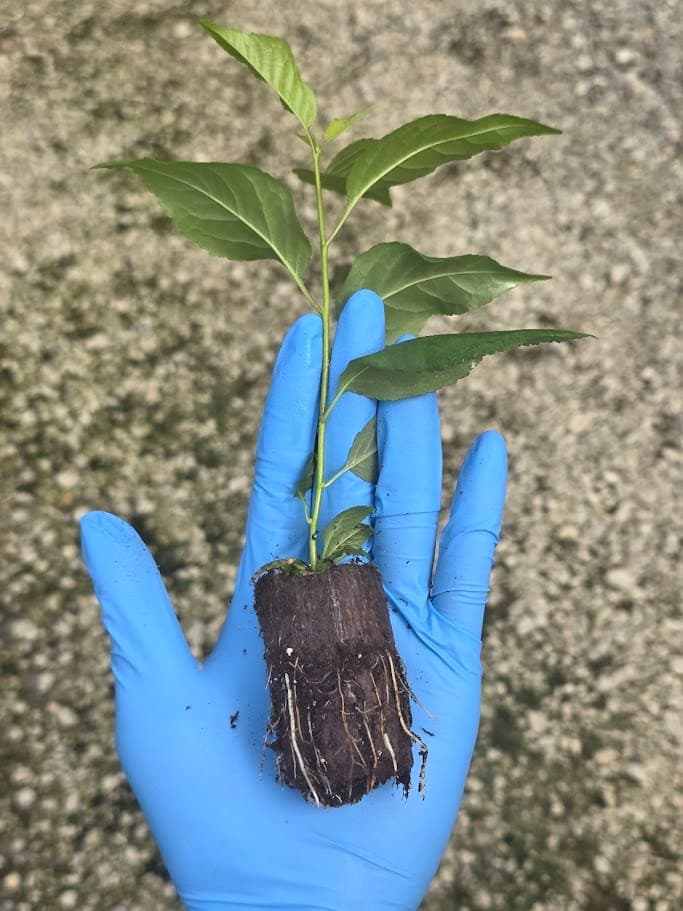
Cherry Rootstock 'Brokforest'
'Brokforest', sold under the trademark Maxma® 14, is an interspecific cherry rootstock from a cross of Prunus mahaleb and P. avium (Mazzard), selected by Lyle Brooks in Oregon. It is a semi-dwarfing, precocious rootstock that induces trees to roughly 60-65% of standard size while offering strong resistance to root-knot nematode and bacterial canker. Growers use it for sweet cherry scions where controlled size, good anchorage, and disease tolerance are priorities.
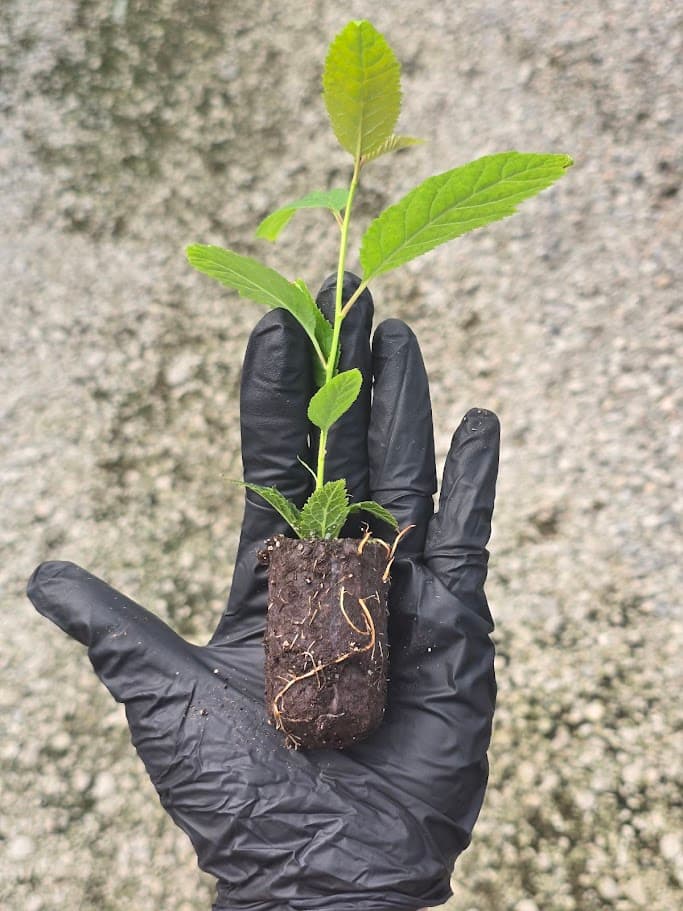
Cherry Rootstock 'Colt'
Colt is a semi-vigorous cherry rootstock bred at England's East Malling Research Station from a cross of Prunus avium and Prunus pseudocerasus, widely used by orchardists and home growers for grafting both sweet and tart cherry varieties. It is valued for its strong adaptability to heavy, wet, or poorly drained soils, early precocity, and reduced susceptibility to certain soil-borne diseases compared to traditional seedling rootstocks like Mazzard. Vigor is somewhat variable by region — it produces a tree around 70-90% of standard Mazzard size in most conditions, though it can approach full standard size under irrigated or very fertile conditions.
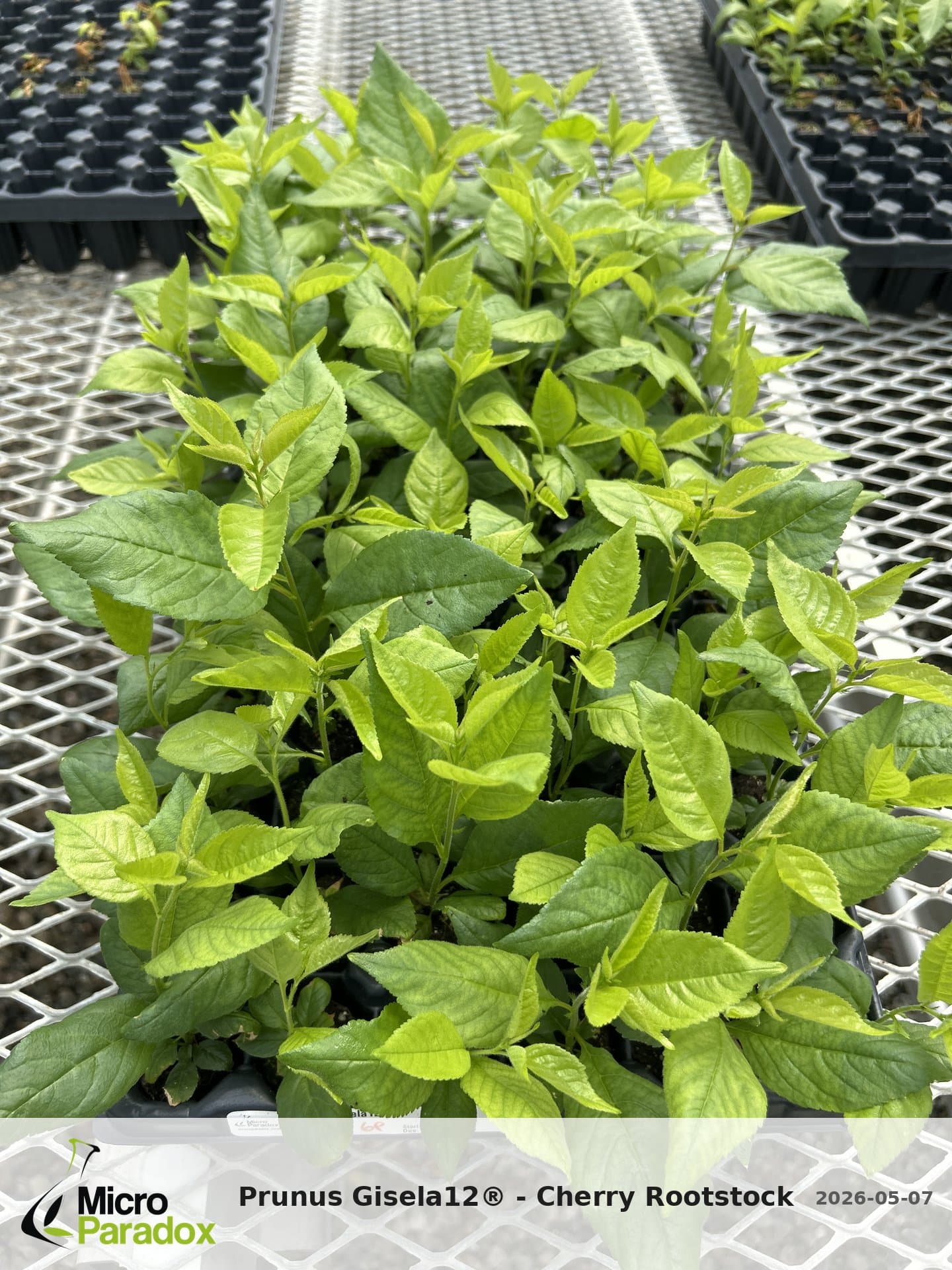
Cherry Rootstock 'Gisela 12'
Gisela 12 is an interspecific Prunus rootstock (Prunus cerasus 'Leitzkauer' x Prunus canescens, USPP #9631) used commercially to produce semi-vigorous, precocious cherry trees. It is valued for strong anchorage, reduced suckering compared to older Gisela selections, and adaptability to a wide range of soil types from light to heavy, provided drainage is adequate.
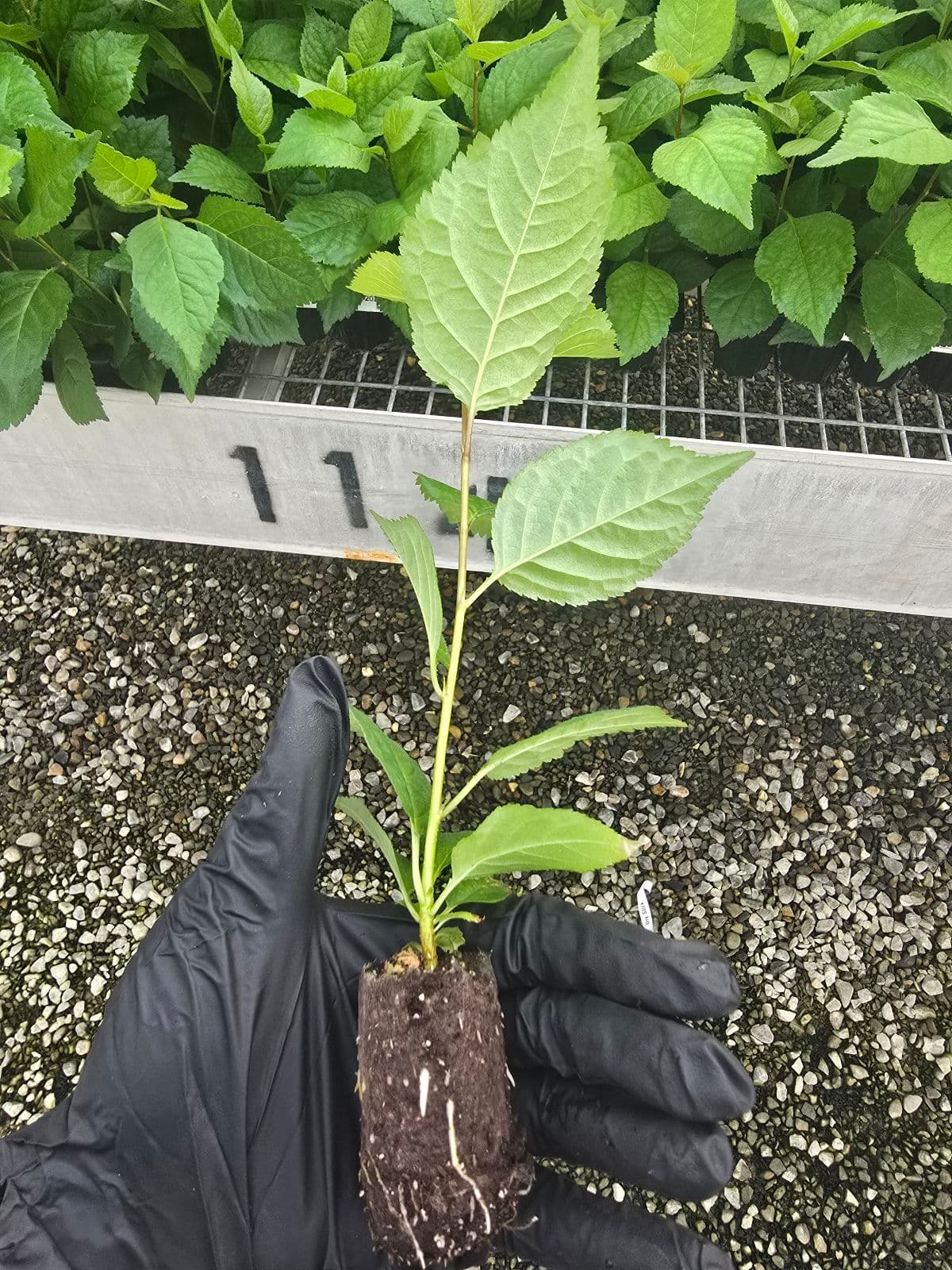
Cherry Rootstock 'Gisela 6'
Gisela 6 (Gi148/2) is a semi-vigorous, size-controlling cherry rootstock bred in Germany from a cross of Prunus cerasus and Prunus canescens. It produces trees roughly comparable in scale to apple on MM106, with an open, round habit and wide-angled, highly productive branching. Growers value it for inducing very early, heavy fruiting in sweet cherry scions while improving fruit size and quality, making it well suited to high-density commercial orchard systems.
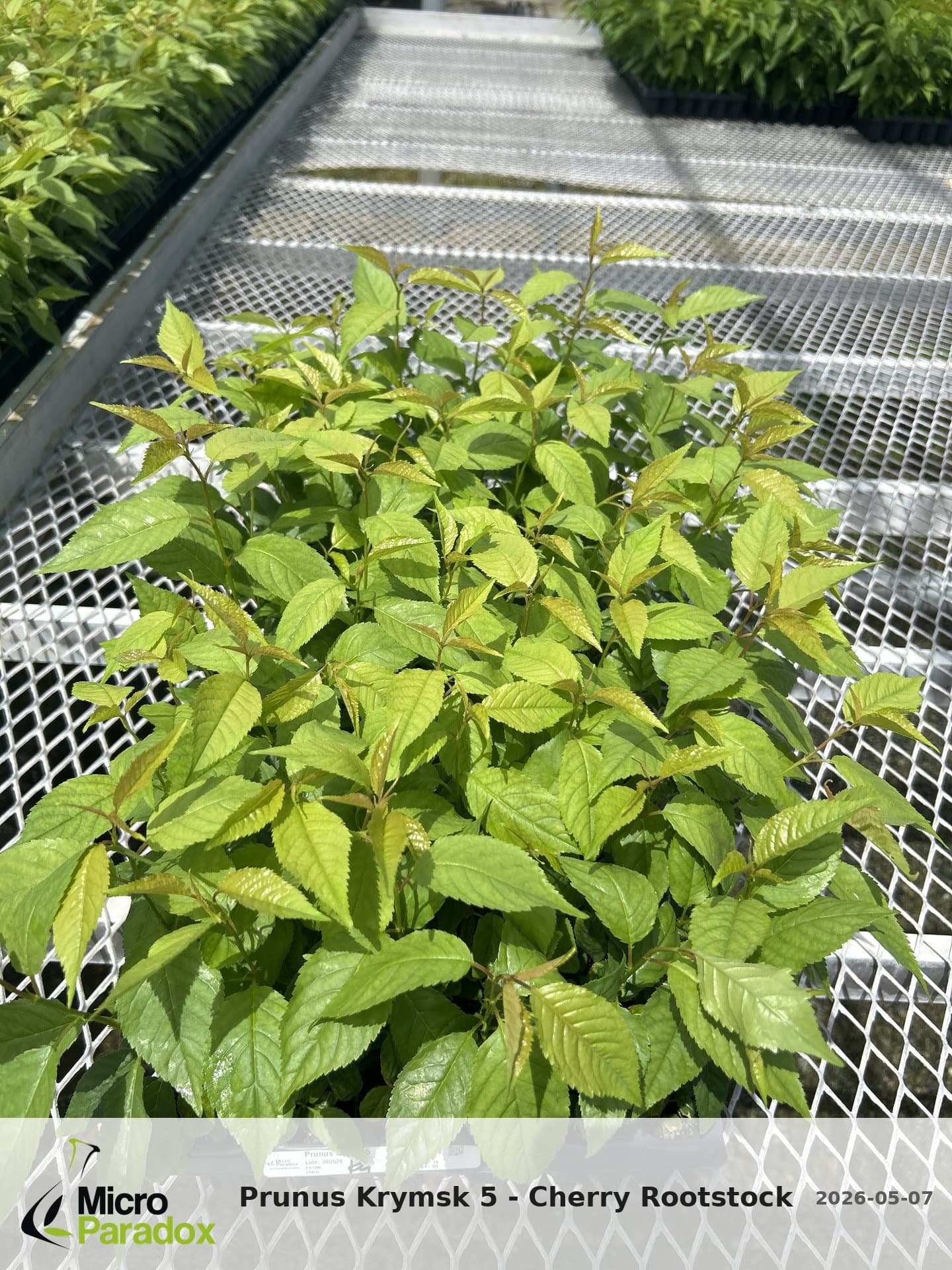
Cherry Rootstock 'Krymsk 5'
Krymsk 5 (VSL-2) is a semi-dwarf to semi-vigorous clonal cherry rootstock bred in Russia's Krasnodar region from Prunus fruticosa x P. serrulata var. lannesiana parentage. It produces precocious, high-yielding trees comparable in size to Gisela 6, with strong anchorage, wide crotch angles, and good adaptability to heavier soils, heat, drought, and cold. It's a popular, lower-cost alternative to Gisela rootstocks for growers wanting earlier bearing than standard Mazzard.
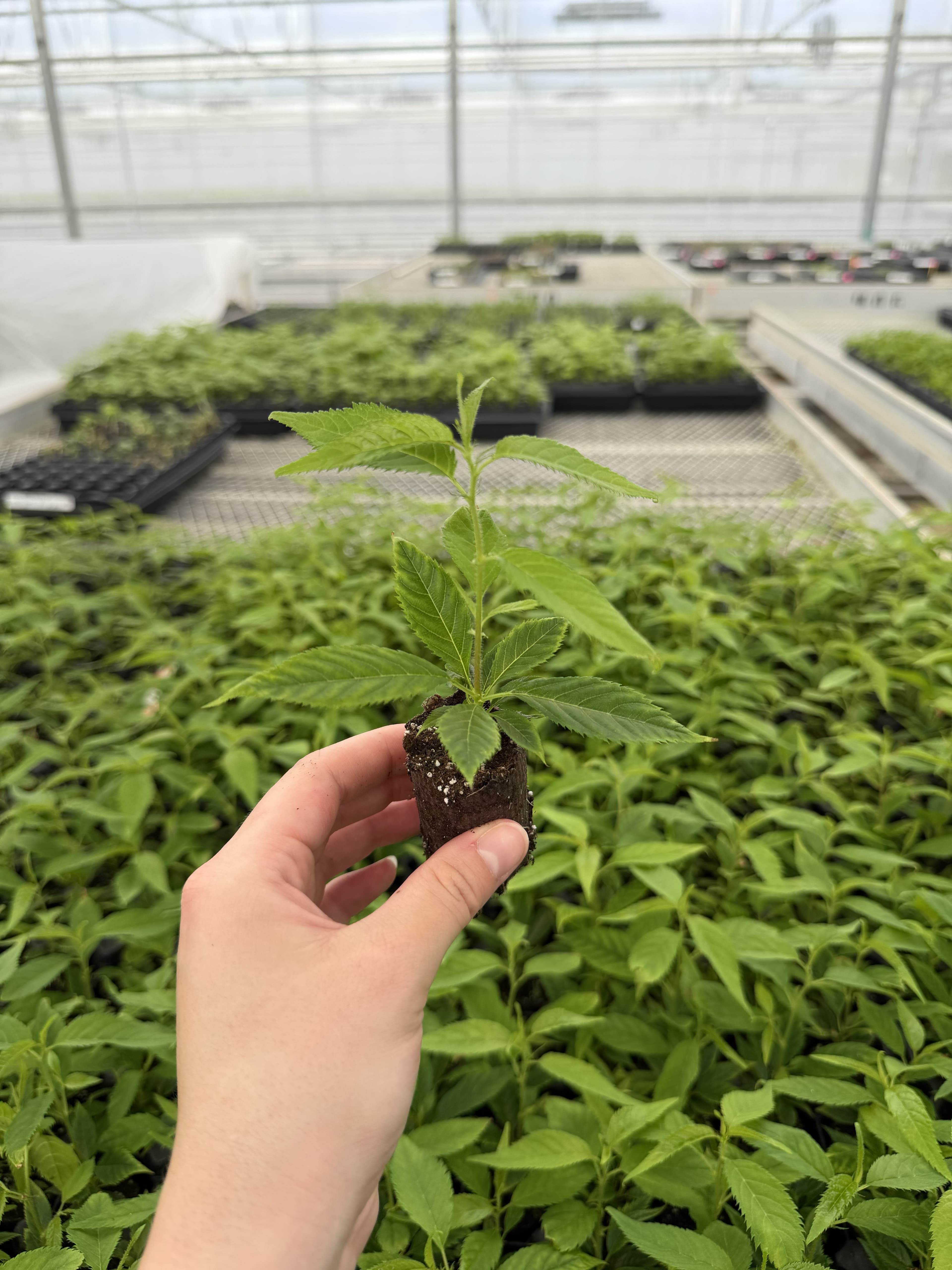
Cherry Rootstock 'Krymsk 7'
Krymsk 7 (cv. Elta, USPP#16,353) is a semi-standard clonal cherry rootstock bred at the Krymsk Experimental Breeding Station in Russia. It is valued commercially for its precocity, wide soil adaptability, and strong anchorage, with vigor comparable to Mahaleb and good performance in hot, dry growing regions such as California's Central Valley.
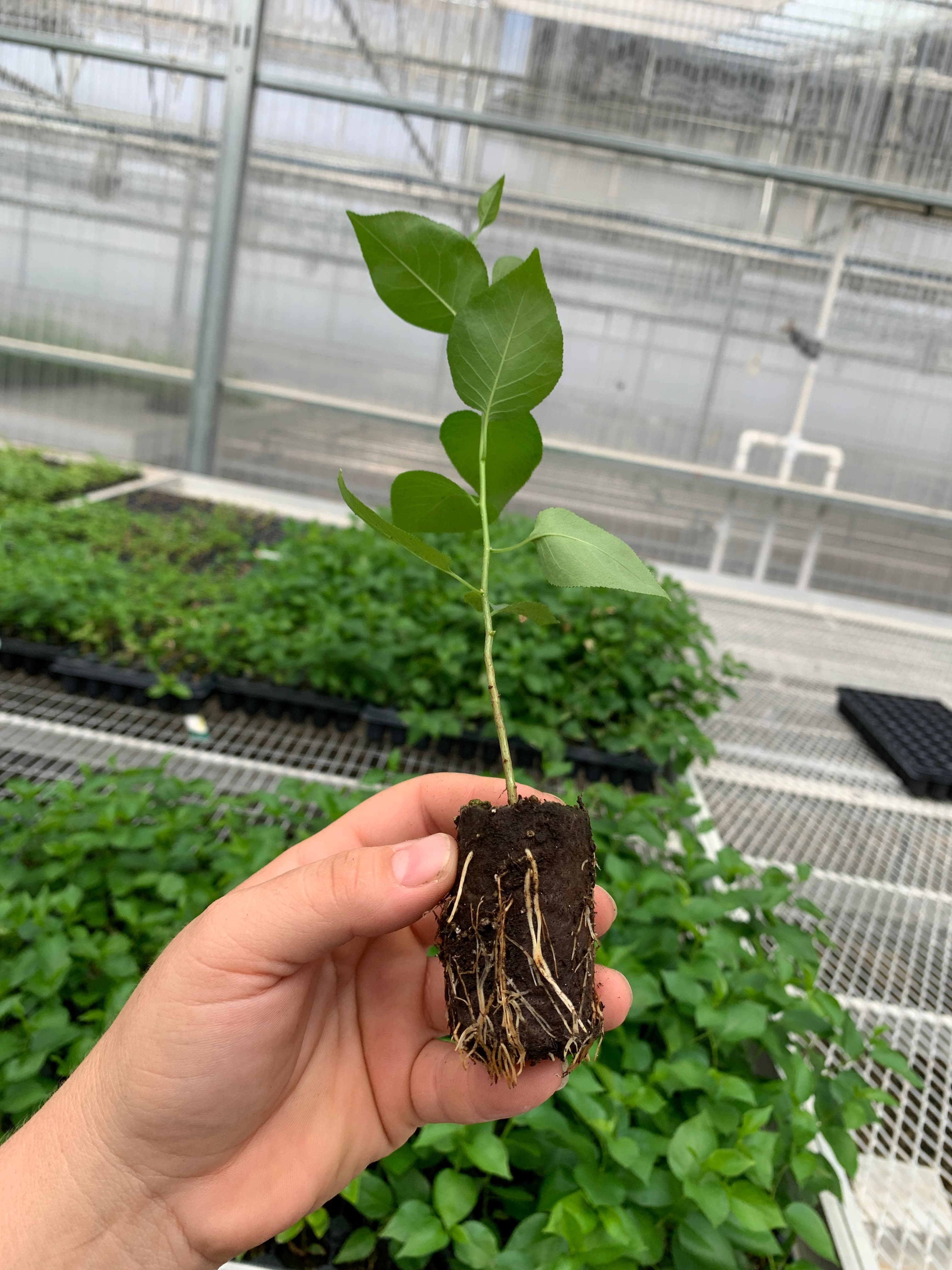
Mahaleb Cherry Rootstock 'Performer'
Performer™ Mahaleb (also sold as 'Southwick 156-5' or UCMH 56) is a University of California-bred clonal selection of Prunus mahaleb used as a cherry rootstock. Developed by pomologist Stephen Southwick at UC Davis, it is valued for improved resistance to Phytophthora root and crown rot, resistance to stem pitting virus, low suckering, and excellent anchorage, giving cherry scions a dependable, widely adapted root system for orchard production.
Paradox Walnut Rootstock 'Vlach'
Vlach is one of the original clonal Paradox walnut rootstocks, a hybrid of Northern California black walnut (Juglans hindsii) and English walnut (Juglans regia), selected from a vigorous Paradox tree in Stanislaus County and commercially available since 1999. It is prized for exceptional vigor and tolerance of heavier, calcareous soils, and is sold as an ungrafted clonal liner for orchardists and nurseries to bud or graft with English walnut scion selections.

Peach Rootstock 'Controller 6'
Controller 6 (HBOK 27) is a size-controlling clonal peach rootstock bred by the USDA/UC Davis program from a 'Harrow Blood' x 'Okinawa' peach cross. Patent documentation describes it as conferring moderate vigor control, producing compound trees with roughly 30-40% reduced trunk cross-sectional area and height compared to standard 'Nemaguard', with fewer root suckers and less pruning required. It is graft-compatible with peach, nectarine, almond, apricot, and Japanese plum scions and carries moderate root-knot nematode resistance, making it a popular choice for high-density commercial orchard systems.
Peach-Almond Hybrid Rootstock 'Bright's Hybrid 5'
Bright's Hybrid 5 (cv. Arthur V, USPP #18,782) is a clonal peach x almond hybrid rootstock bred by Bright's Nursery, used to propagate almonds, peaches, plums, and apricots. It is valued for its vigor and productivity, root-knot nematode resistance, deep and well-anchored root system, and drought tolerance, with vigor and productivity reported as superior to Nemaguard.
Peach/Almond Hybrid Rootstock 'Atlas'
Atlas is an interspecific peach × almond hybrid clonal rootstock, propagated as a rooted cutting and used primarily for almond, peach, and nectarine production. It is extremely vigorous with excellent anchorage and root-knot nematode resistance comparable to Nemaguard, plus good tolerance of saline and alkaline soils. Growers select Atlas to drive large, productive trees and increased fruit size in arid, well-drained orchard settings.
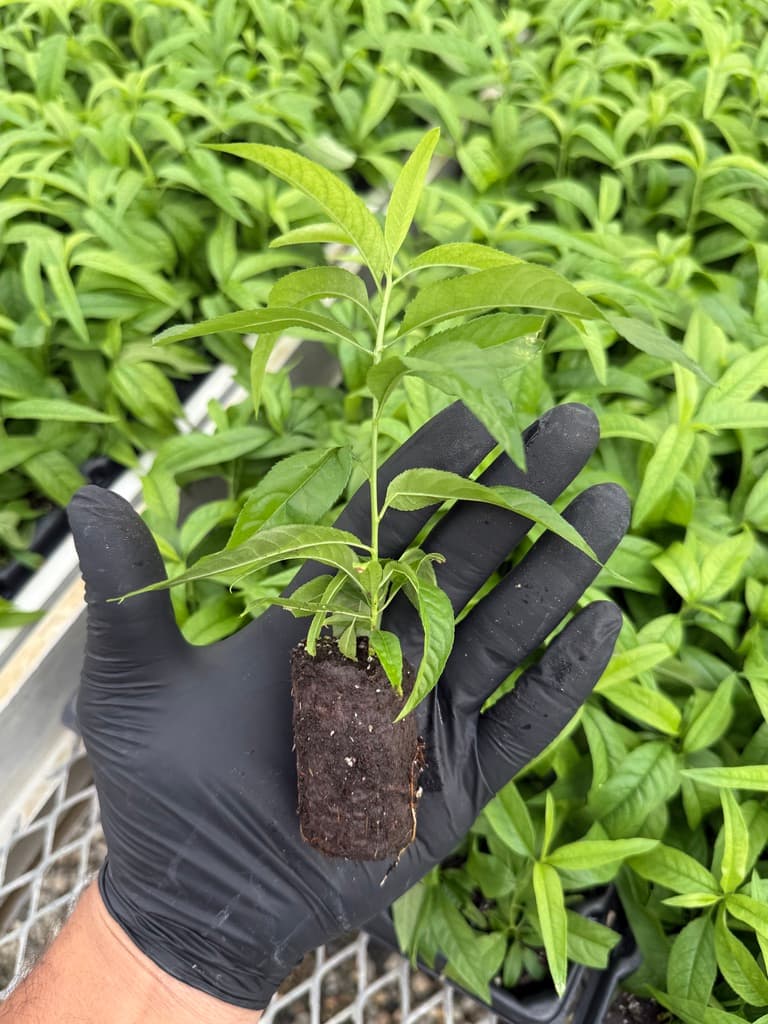
Peach/Almond Hybrid Rootstock 'Viking'
Viking is a patented (PP8912) interspecific clonal rootstock combining peach, almond, plum, and apricot parentage, developed by Zaiger from a Nemaguard x almond seedling cross. It is used commercially under peach, nectarine, almond, apricot, and plum scions for its vigorous, well-anchored growth and strong resistance to root-knot nematode and bacterial canker. Viking roots readily from hardwood cuttings, supporting uniform clonal orchard establishment, and tolerates heavier and saline/alkaline soils better than many seedling peach rootstocks.
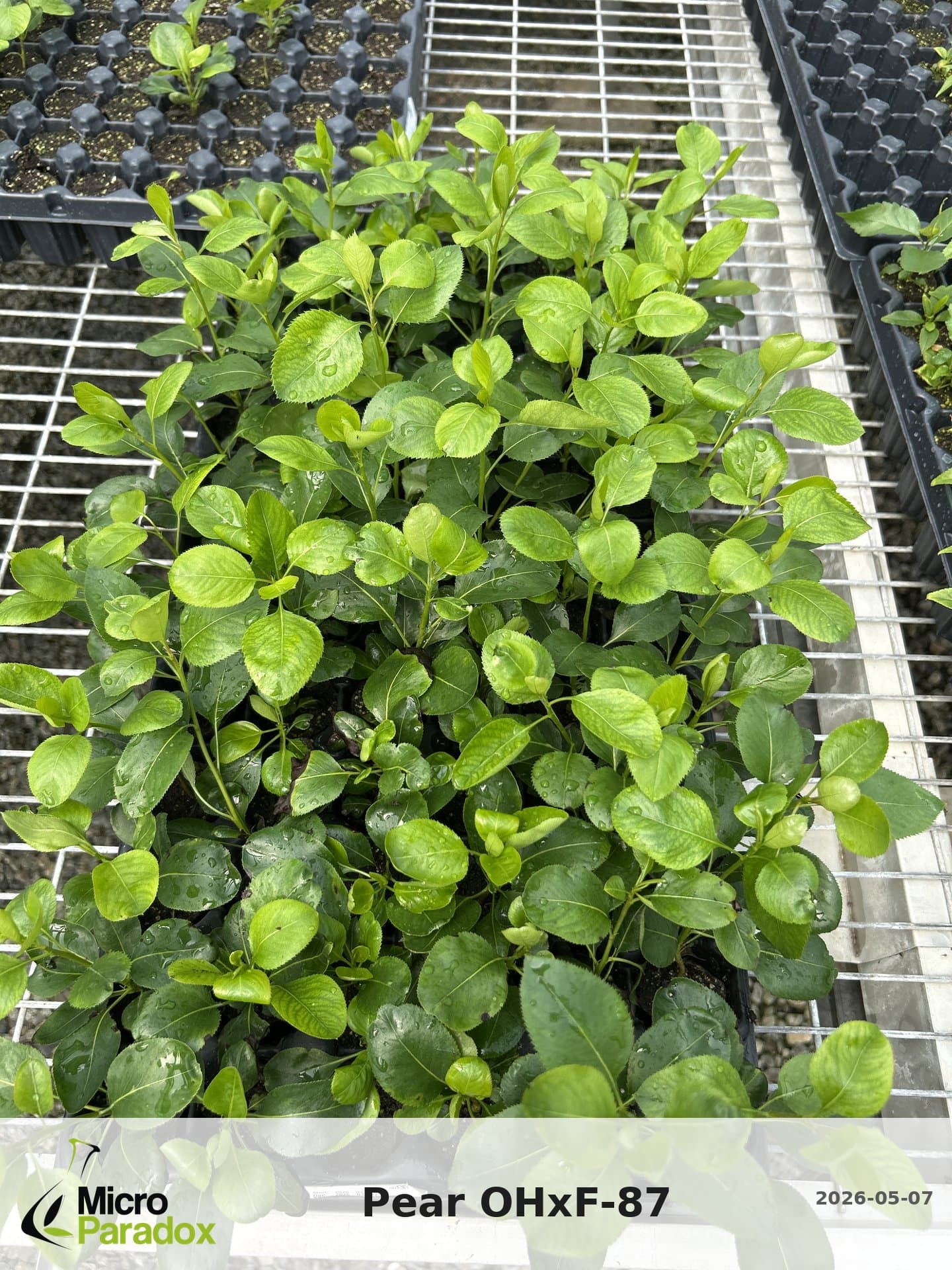
Pear Rootstock 'OHxF 87'
OHxF 87 (Old Home x Farmingdale 87, also known as Brooks Selection) is a semi-vigorous clonal pear rootstock used widely in commercial orchards. It is precocious and very productive, producing trees about 75-90% the size of a Bartlett seedling, and is valued for its strong anchorage, fire blight resistance, and reliable performance across a range of soils.
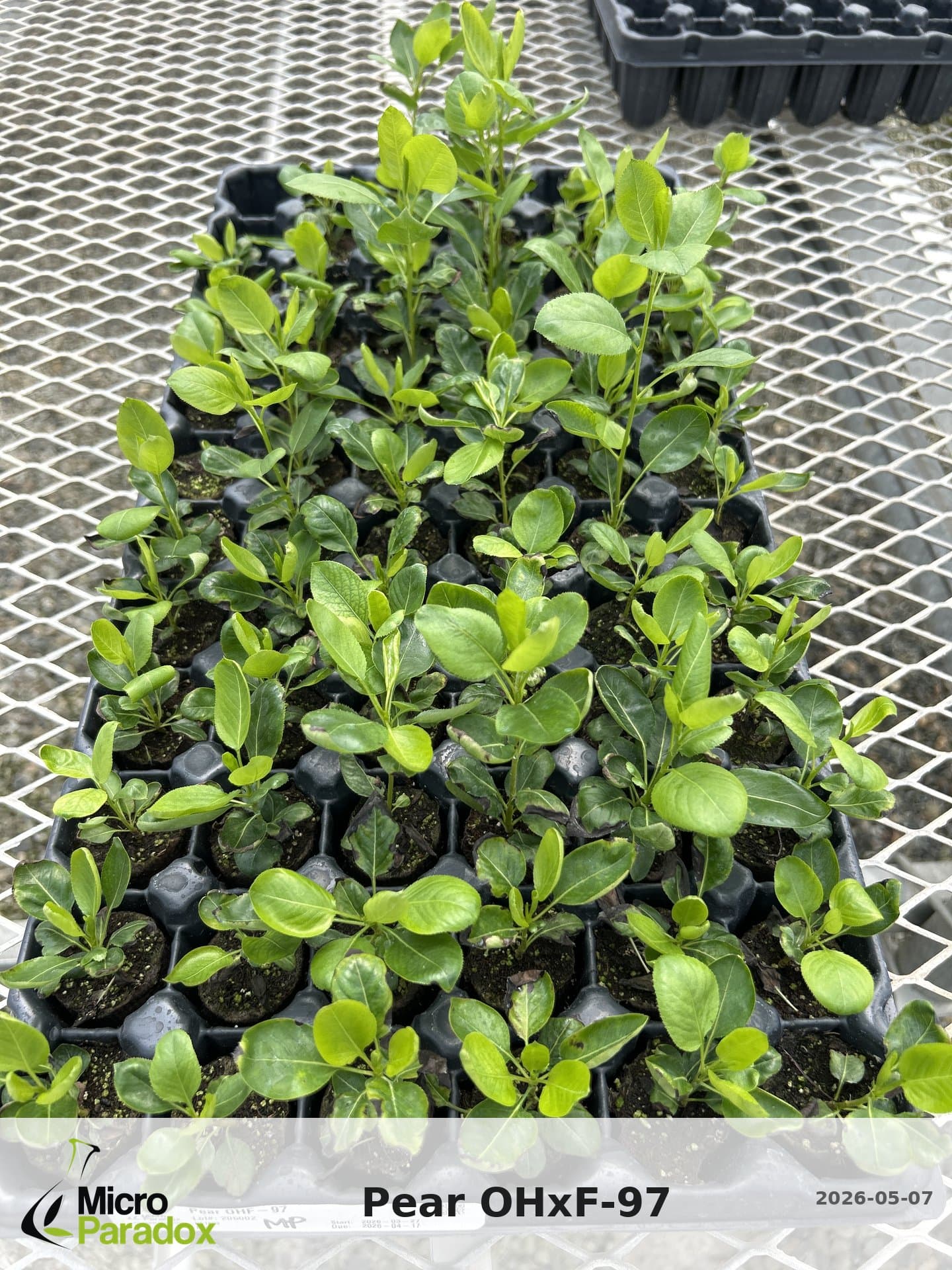
Pear Rootstock 'OHxF 97'
OHxF 97 is a full-vigor, semi-standard to standard-size clonal pear rootstock bred from Old Home x Farmingdale by Prof. F.E. Reimer at Oregon State University. It produces upright, well-anchored, highly productive trees with excellent resistance to fire blight and pear decline, and is compatible with most European and many Asian pear varieties. Valued by commercial and backyard orchardists alike for its cold hardiness, durability, and dependable yields.

Walnut Rootstock 'RX1'
RX1 is a clonal, interspecific hybrid walnut rootstock (Juglans microcarpa × Juglans regia) developed through the UC Davis/UCCE/USDA-ARS Paradox Diversity Study for its reduced susceptibility to Phytophthora citricola crown and root rot compared to standard Paradox rootstocks. Propagated by tissue-culture micropropagation for genetic uniformity and strong nursery/orchard survivability, it is used exclusively as understock for grafting English walnut (Juglans regia) scion varieties, particularly on high disease-pressure or replant sites.

Walnut Rootstock 'VX211'
VX211 is a clonal Paradox hybrid walnut rootstock (Juglans hindsii x Juglans regia) selected for its vigor and ease of propagation by tissue culture or rooted cuttings. It was patented for its reduced susceptibility to root lesion nematodes (Pratylenchus vulnus) and to Phytophthora citricola compared to standard seedling Paradox rootstocks. Widely used in commercial English walnut orchards for its adaptability to a range of soils and strong orchard establishment.